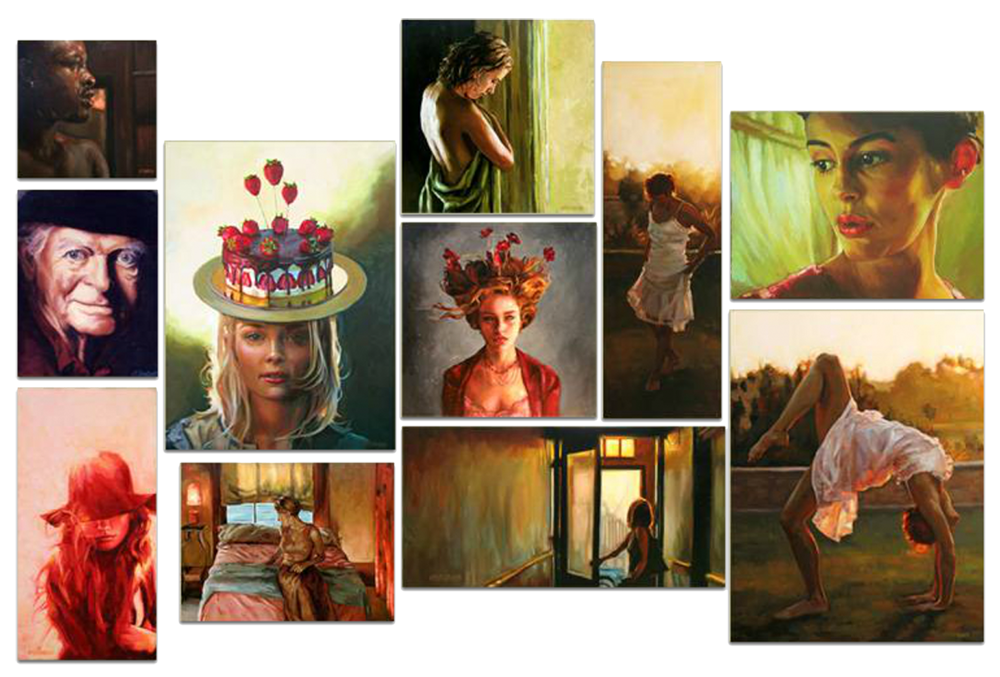
I create my paintings with art-light at my easel. So if you buy a painting, and you don’t put any light on it where you hang it, there’s no way it will look the way it does here. And I can explain why(!). (Well, not scientifically or anything; feel free to text me the correct jargon!):
Light moves through the paint, and reflects off the white surface of the gessoed canvas, and comes back at the eye through the deliciously colored grease, essentially illuminating the painting from the inside.
No light? Waaaay less magic.
My paintings DO hold up in lots of different lighting scenarios though(!), and they each provide their own mood.
TO PROPERLY LIGHT AN OIL PAINTING, position the light source above the painting at a 30-degree angle, (not directly overhead). This will minimize glare, and avoid stretcher-bar or frame shadows, and create an even illumination across the painting.
Use a flood bulb if the fixture you are using is close to the painting.
Use a spot if it’s being lit from farther away. (The spot light bulb will mimic the flood bulb toward the end of its range).
I prefer a natural light (to a soft warm) on my paintings because I prefer to mix my palette so it leans slightly warm.
A painting’s surface is similar to a mirror’s. If you place the light at certain angles, you could unpleasantly surprise someone coming around a corner. So just pick the smartest way for your particular scenario to get light onto the piece. Sometimes it’s simply a tall floor lamp with an artist’s bulb in it. Easy peasy.